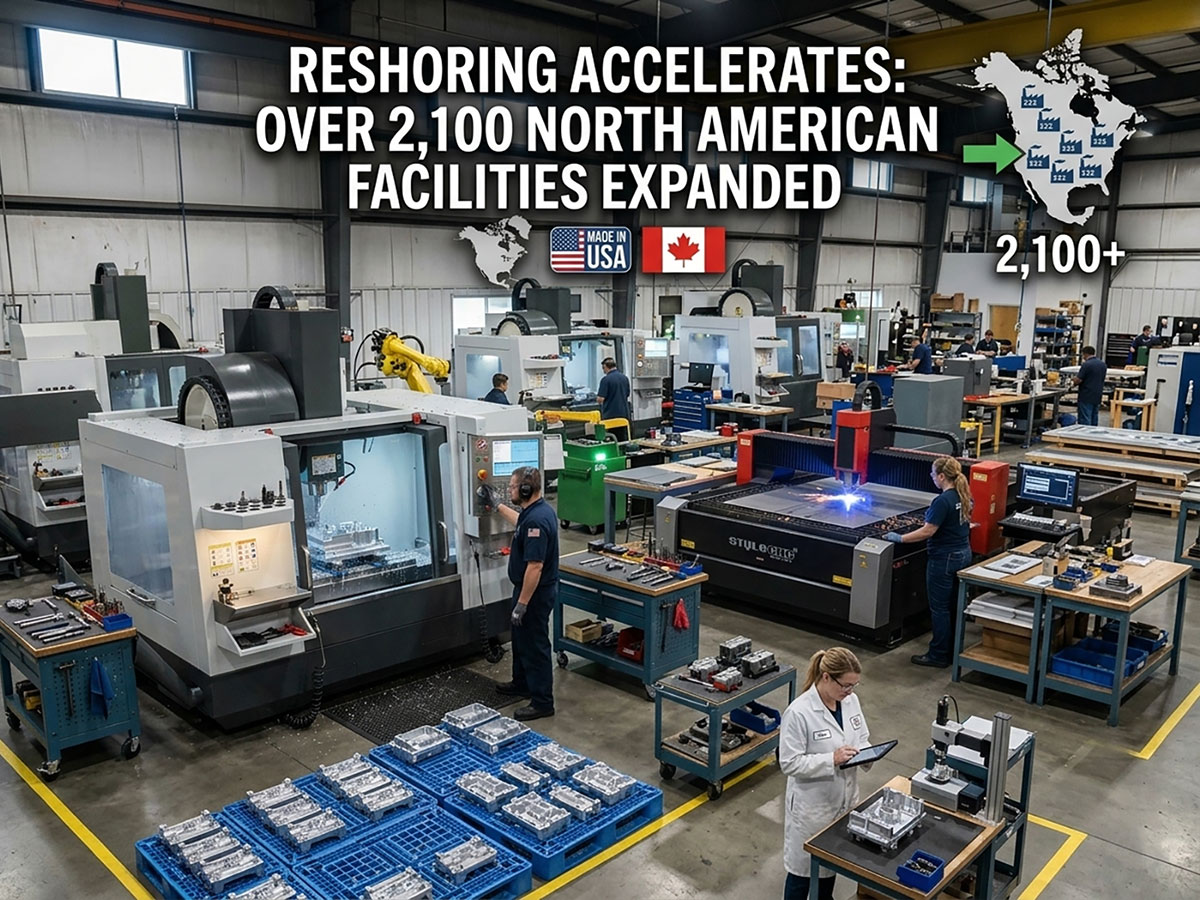
That is the headline. Now let us look at what is driving the shift, what the numbers reveal, and what it means if you buy, sell, or operate manufacturing equipment.
Why the Reshoring Surge Matters
Reshoring is the return of manufacturing that previously moved overseas. After decades of offshoring to chase low labor costs, North American companies are bringing production home in large numbers.
This is not a temporary reaction. It reflects a structural rethink of how supply chains are built, weighted toward resilience and responsiveness rather than the lowest possible unit cost.
The result is a wave of factory construction, equipment purchases, and hiring that is reshaping the industrial landscape. For machine builders and parts suppliers, it is a multi-year demand engine.

数据说话,了解回流经济
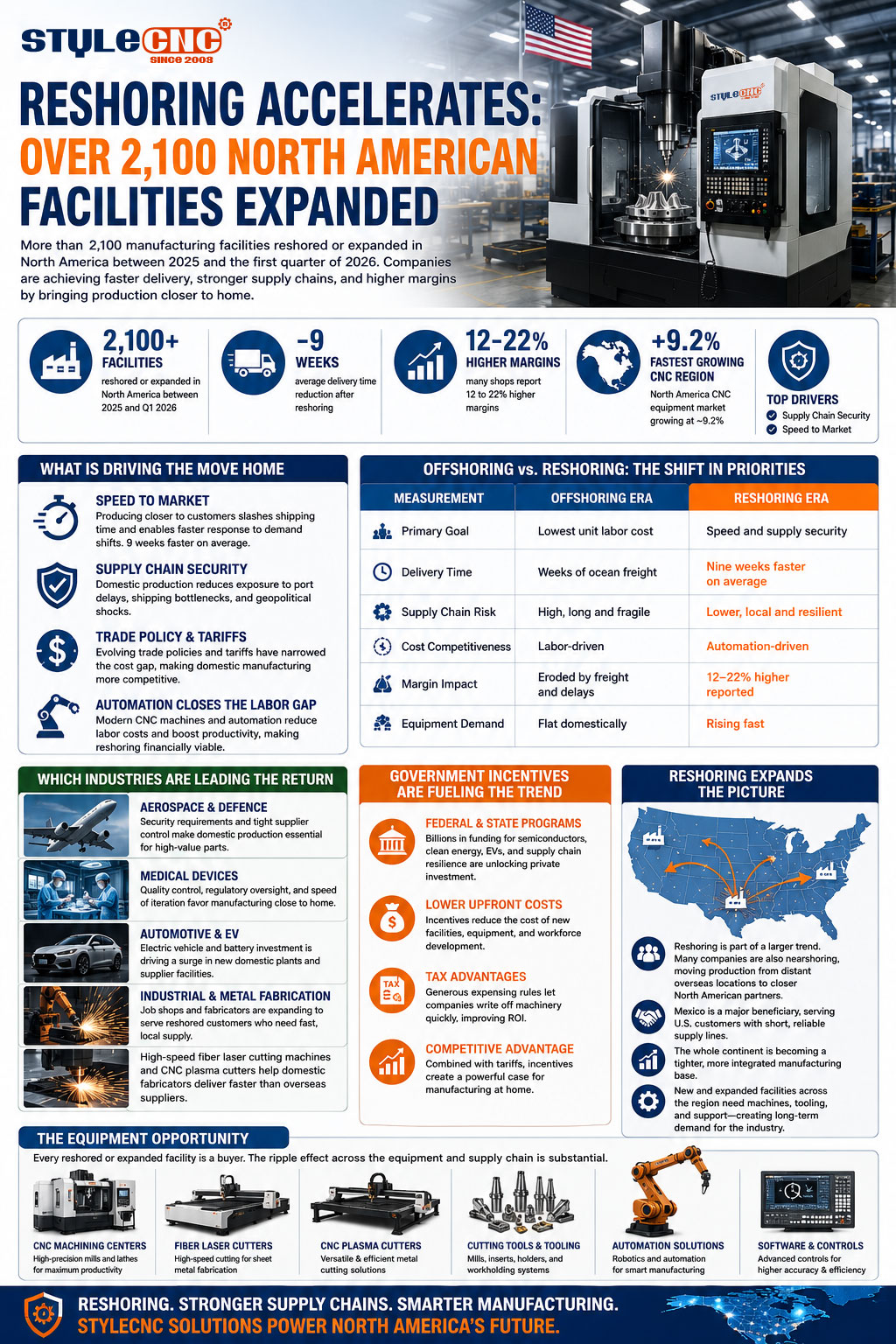
These figures capture the scale and momentum of the current reshoring wave:
• Over 2,100 facilities reshored or expanded in North America between 2025 and the 1st quarter of 2026
• Average delivery time reduction after reshoring: 9 weeks
• Many shops report 12 to 22 percent higher margins after moving production closer to customers
• North America is the fastest growing数控equipment region, expanding at about 9.2 percent
• Supply chain security and speed to market rank as the top 2 stated drivers
• Reshoring and foreign direct investment continue to add hundreds of thousands of announced manufacturing jobs
One honest note: reshoring announcements and completed projects are not the same thing. Treat announced job and facility figures as strong directional signals, while completed expansions like these 2,100 facilities are the harder, more reliable indicator.
What Is Driving the Move Home
Several forces are pushing companies to reshore at the same time. Understanding them explains why the trend has staying power.
加快上市速度
Producing closer to customers slashes shipping time and lets companies respond to demand shifts in days instead of weeks. The 9 week average delivery improvement is a direct competitive advantage.
供应链安全
Years of disruption taught manufacturers that long, fragile overseas supply chains are a serious risk. Domestic production removes exposure to port delays, shipping bottlenecks, and geopolitical shocks.
Trade Policy and Tariffs
Shifting tariff structures and trade policy have narrowed the cost gap between overseas and domestic production. When duties and fr8 are included, the math increasingly favors building at home.
Automation Closes the Labor Gap
Modern数控machines and automation reduce the labor cost disadvantage that originally drove offshoring. A highly automated domestic shop can compete on cost while winning on speed and quality.
This is why reshoring and equipment investment go hand in hand. A new facility needs capable machines, and modern 数控机床 deliver the productivity that makes domestic manufacturing financially competitive.
Offshoring vs. Reshoring: The Shift in Priorities
The logic behind sourcing decisions has changed. The table below shows how priorities have moved.
| 多维数据监测 | Offshoring Era | Reshoring Era |
| 首要目标 | Lowest unit labor cost | Speed and supply security |
| 交货时间 | Weeks of ocean freight | 9 weeks faster on average |
| 供应链风险 | High, long and fragile | Lower, local and resilient |
| 成本竞争力 | Labor-driven | Automation-driven |
| 利润率影响 | Eroded by fr8 and delays | 12–22% higher reported |
| Equipment demand | Flat domestically | 快速上升 |
Which Industries Are Leading the Return
Reshoring is broad, but several sectors are moving fastest, each for its own reasons.
Aerospace and defence: Security requirements and the need for tight supplier control make domestic production essential for high-value parts.
Medical devices: Quality control, regulatory oversight, and speed of iteration favor manufacturing close to home.
Automotive and EV: Electric vehicle and battery investment is driving a surge in new domestic plants and supplier facilities.
Industrial and metal fabrication: Job shops and fabricators are expanding to serve reshored customers who need fast, local supply.
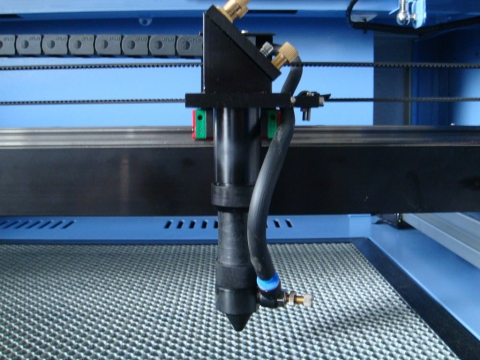
Metal fabrication shops in particular are investing in cutting capacity. High-speed 光纤激光切割机 和 数控等离子切割机 let domestic fabricators turn around sheet metal work faster than overseas suppliers ever could.
Government Incentives Are Fueling the Trend
Policy is reinforcing the business case for reshoring. A wave of federal and state programs now rewards companies that build manufacturing capacity at home.
Funding tied to semiconductors, clean energy, electric vehicles, and domestic supply chains has unlocked billions in private investment. These incentives lower the upfront cost of new facilities and equipment.
Equipment tax provisions add another layer. Generous expensing rules let companies write off machinery quickly, improving the return on every new machine purchased for a reshored line.
Combined with tariffs that raise the cost of imports, this policy environment tilts the decision firmly toward domestic production for a growing share of manufacturers.
Nearshoring Expands the Picture
Reshoring is part of a larger regional shift. Many companies are also nearshoring, moving production from distant overseas locations to closer North American partners.
Mexico in particular has become a major beneficiary, attracting plants that serve United States customers with short, reliable supply lines. The whole continent is becoming a tighter, more integrated manufacturing base.
For equipment suppliers, this broadens the opportunity well beyond a single country. New and expanded facilities across the region all need machines, tooling, and support, deepening the demand created by reshoring.
The Equipment Opportunity
Every reshored or expanded facility is a buyer. The ripple effect across the equipment and supply chain is substantial and long-lasting.
• New machines: routers, mills, lasers, plasma tables, and machining centers for fresh capacity.
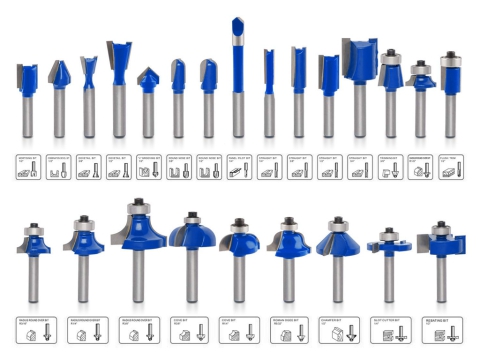
• Tooling and consumables: end mills, inserts, nozzles, and workholding that generate recurring sales.
• Automation: robots, pallet systems, and bar feeders to offset labor costs.
• Service and spares: years of maintenance, parts, and upgrades per installed machine.
• Training: operator and programmer development to fill the skills gap.
For shops planning expansion, understanding the full investment is essential. Our breakdown of 金属数控机床成本 helps model equipment budgets and expected payback for new capacity.

How People Are Searching About Reshoring
These conversational questions reflect what business owners and operators are asking as the trend accelerates:
• "Is reshoring actually cheaper than manufacturing overseas now?"
• "What equipment do I need to bring production back in-house?"
• "How much faster is delivery when I produce domestically?"
• "Can automation really close the labor cost gap with overseas factories?"
• "Which industries are reshoring the fastest right now?"
• "Will reshoring keep manufacturing equipment demand high?"
Common Mistakes When Reshoring Production
Bringing production home is a major move. Avoid these errors when planning your expansion:
• Underestimating equipment lead times: Machine delivery and installation take planning; order capacity before you win the work, not after.
• Ignoring the skills gap: Workforce skills are the top barrier to manufacturing growth; budget for training from the start.
• Buying capacity you cannot staff: Balance machine purchases with realistic hiring and automation plans.
• Skipping automation: Without automation, domestic labor costs can erase the speed advantage. Plan for it early.
• Choosing the wrong machine for the work: Match equipment to your actual part mix rather than overbuying or underbuying capability.
• Treating reshoring as purely a cost decision: The biggest gains are speed, quality, and supply security, not just unit price.
这对不同读者意味着什么
For shop owners: Demand from reshored customers is rising. Investing in capacity and automation now positions you to win local supply contracts.
For equipment buyers: Order lead times matter. Securing machines and tooling ahead of demand protects your ability to deliver.
For parts and tooling sellers: Every new facility is years of recurring demand for consumables, workholding, and spares.
For investors and analysts: Watch metal fabrication and machining capacity in North America. Follow developments in our CNC行业新闻 持续报道。
常見問題解答
What is reshoring?
Reshoring is the practice of returning manufacturing that previously moved overseas back to the home country. Companies reshore to gain speed, supply chain security, and quality control.
How many facilities have reshored recently?
More than 2,100 manufacturing facilities reshored or expanded in North America between 2025 and the 1st quarter of 2026, reflecting one of the strongest reshoring waves on record.
Why are companies reshoring now?
The main drivers are speed to market and supply chain security. Shifting trade policy and modern automation, which closes the labor cost gap, also make domestic production more competitive.
How much does reshoring improve delivery times?
Companies report an average 9 week reduction in delivery times after reshoring, because producing closer to customers eliminates long ocean fr8 and port delays.
Does reshoring increase manufacturing costs?
Not necessarily. While domestic labor can cost more, automation, lower freight, fewer delays, and tariff savings often offset it. Many shops report 12 to 22 percent higher margins after reshoring.
What equipment does a reshoring facility need?
It depends on the work, but common purchases include数控mills and machining centers, routers, fiber laser cutters, plasma tables, plus tooling, automation, and workholding to maximize productivity.
Will reshoring keep equipment demand high?
Current trends suggest yes. North America is the fastest growing数控equipment region, and each new facility creates years of demand for machines, tooling, and service.
资料来源和数据说明
Figures in this article are compiled from manufacturing reshoring and industry investment reporting,数控equipment market analysis, and trade publications, verified in June 2026. Announced job and investment figures are directional, while completed facility expansions are the more reliable indicator. Data should be rechecked as new reports publish, since trade policy can shift the numbers quickly.
Equip Your Reshored Facility with STYLECNC
As manufacturing returns to North America, the right equipment is the foundation of a competitive shop. Explore STYLECNC金属数控机床, CNC加工中心和 五轴数控机床 to build capacity for the reshoring era.