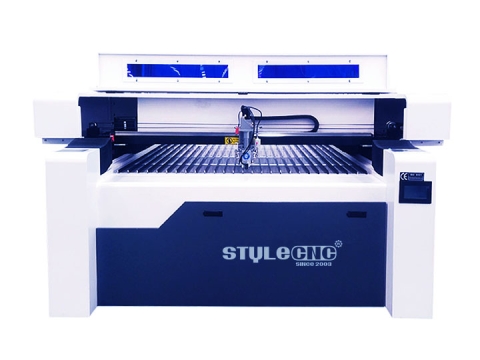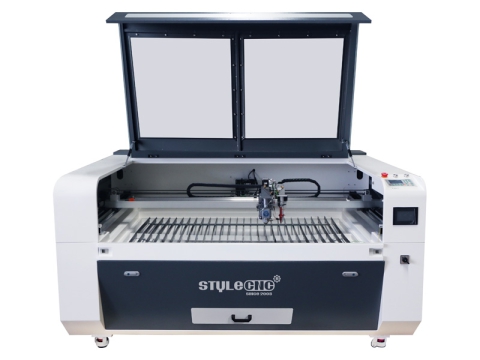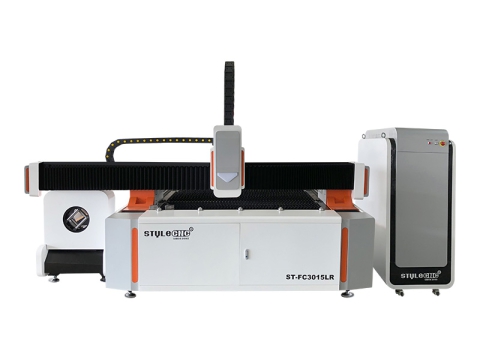
适用于高反射金属的 IPG 光纤激光切割机
查看使用 IPG 光纤激光切割机切割高反射金属的测试视频。购买用于黄铜、铜、银、金、铝、青铜的金属激光切割机。
该视频展示了最好、最实惠的光纤激光切割机 ST-FC3015E 用于钣金加工,电源选项为 1000W 至 3000W.
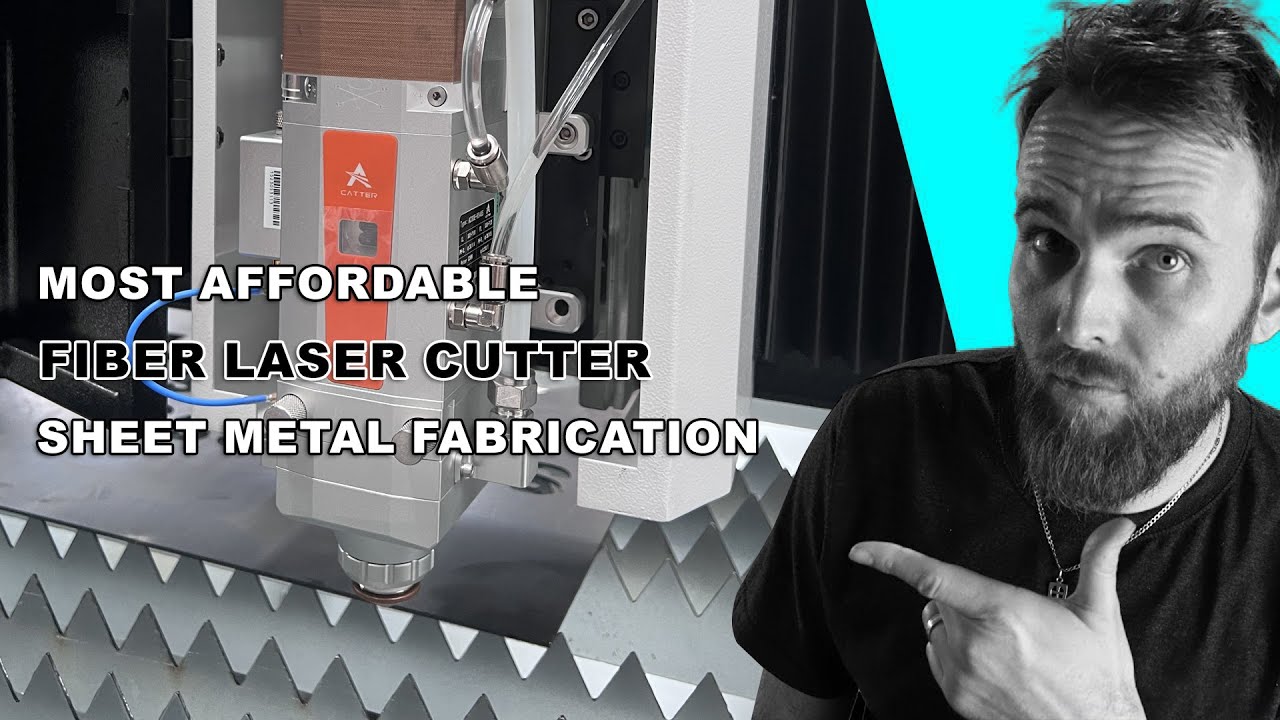
你会看到 STYLECNC's best and most affordable fiber laser cutting machine ST-FC3015E 切割各种厚度的金属板,最便宜的数控光纤激光金属切割机配有光纤激光功率选项 1000W, 1500W, 2000W 以及 3000W 用于不锈钢、碳钢、低碳钢、铁、铝、黄铜和铜的金属板切割。
CNC控制器使整个切割过程自动化,无需人工干预。无论是速度还是精度,等离子切割机、水刀切割机和线切割机都无法比拟它的切割效果。
在环保方面,它是一种“绿色”环保的金属切削刀具,几乎没有其他金属切削刀具能与之媲美。
如果你正在寻找低成本 金属板材激光切割机,这将是一个价格实惠的绝佳选择。您可以选择经济实惠的 RECI 光纤激光发生器或来自中国的 Raycus 激光源,使用寿命超过 10,000 小时。
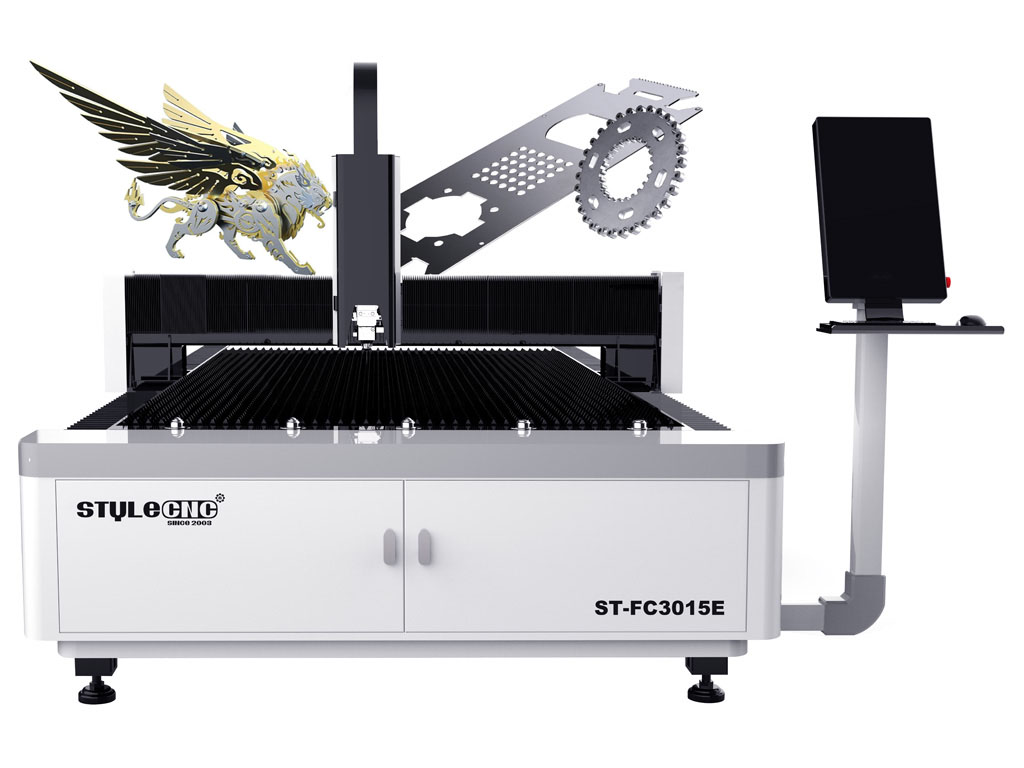
One of the most common concerns for first-time buyers evaluating an affordable fiber laser cutter like the ST-FC3015E is understanding the real-world thickness capacity across different metals. With a 1000W laser source, expect clean cuts through 3–4mm carbon steel using oxygen assist gas and up to 2mm stainless steel with nitrogen. Stepping up to 1500W extends carbon steel capacity to approximately 6mm and stainless steel to 3mm, while the 2000W 以及 3000W configurations push those limits further to 10–16mm carbon steel and 6–10mm stainless steel respectively.
Aluminum and reflective metals like brass and copper require nitrogen assist gas and careful focus calibration to prevent back-reflection damage. A 1500W unit handles 2mm aluminum comfortably, while 3000W 达到约 8mm. For businesses planning to process diverse metal types and gauges, reviewing the full range of 光纤激光切割机 helps match laser power to your specific material mix and production volume.
The video highlights that plasma cutters and waterjet machines cannot match the cut quality of a fiber laser on thin to mid-range sheet metal, and workshop experience across CNCZone and Practical Machinist forums confirms this consistently. Fiber lasers produce a kerf width of 0.1–0.3mm compared to 1–3mm for plasma, which translates directly to less material waste and tighter part nesting. Edge quality is significantly cleaner with fiber, often eliminating secondary finishing operations like deburring and grinding that plasma-cut parts typically require.
Operating cost is another decisive factor. Fiber lasers consume substantially less electricity per cutting hour than plasma systems, and consumable expenses (nozzles, lenses) are lower over time than plasma electrodes and shield cups. For shops currently using a 数控plasma cutter for sheet metal and considering an upgrade path, transitioning to an entry-level fiber laser delivers measurable improvements in precision, edge finish, and per-part cost on metals under 10mm 厚。
Maximizing the return on an affordable fiber laser cutter involves optimizing 3 controllable cost drivers: assist gas consumption, nesting efficiency, and cutting parameter accuracy. Oxygen assist gas is significantly cheaper than nitrogen and produces faster cuts on carbon steel, though it leaves an oxide layer on the edge. Nitrogen produces oxide-free edges essential for stainless steel and aluminum but costs more per hour. Matching gas type to material and finish requirements prevents unnecessary spending.
Smart nesting software arranges parts to minimize sheet waste, often recovering 10–15% more usable material per sheet compared to manual layout. Dialing in optimal focus position, cutting speed, and gas pressure for each material thickness eliminates rework from burrs, dross, or incomplete cuts. For operators working with the 激光金属切割机 platform, documenting proven parameter sets for each material grade creates a reusable cutting library that accelerates job setup and improves consistency across production runs. Shops that also handle tube and pipe work alongside sheet metal can explore 光纤激光切管机 to consolidate operations under a single technology platform.
答: 1000W 至 1500W fiber laser is the minimum for reliable sheet metal production. At 1500W, you can cut up to 6mm carbon steel and 3mm stainless steel at commercially viable speeds. Below 1000W, cutting speed drops significantly, making it impractical for batch work.
A: Both are reputable Chinese laser source manufacturers. Raycus offers a longer track record in fiber laser cutting applications with service life exceeding 100,000 hours. RECI provides competitive pricing with reliable performance. Your choice should factor in local service availability and warranty terms rather than brand alone.
A: Yes, but with precautions. Modern budget fiber lasers with back-reflection protection can cut aluminum up to 2–3mm at 1500W. Copper and brass require slower speeds and nitrogen gas. Always confirm your machine includes anti-reflection safeguards before cutting highly reflective materials.
A: Use oxygen for carbon steel and mild steel to achieve faster cuts at lower cost. Use nitrogen for stainless steel, aluminum, and brass to produce oxide-free, clean edges. Compressed air can substitute for nitrogen on thinner materials under 2mm where edge appearance is not critical.
A: A standard 3015 (3m x 1.5m table) fiber laser requires approximately 6m x 3m of floor space including operator access, the chiller unit, and the electrical cabinet. Additional clearance is needed for material loading and sheet handling on the intake side.
A: Bottom-edge burrs typically result from incorrect focus position, insufficient gas pressure, or excessive cutting speed for the material thickness. Lower the focus point slightly below the material surface, increase assist gas pressure, and reduce speed by 10–15% to achieve cleaner edges.
A: For shops processing more than 20–30 sheet metal jobs per month, an entry-level fiber laser pays for itself through reduced outsourcing costs, faster turnaround, and superior edge quality compared to plasma or manual cutting. The ROI timeline for a budget 1500W unit typically falls within 12 to 18 months.
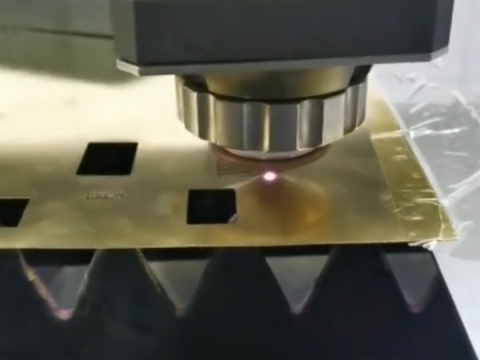
查看使用 IPG 光纤激光切割机切割高反射金属的测试视频。购买用于黄铜、铜、银、金、铝、青铜的金属激光切割机。
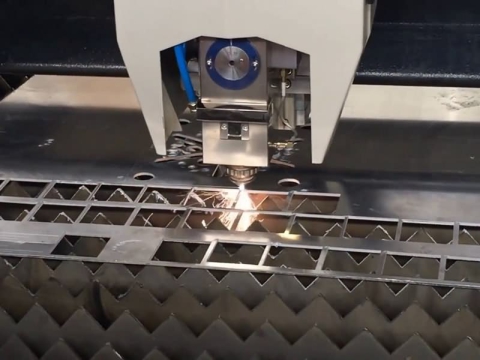
你会看见 1000W 本视频中,配备 IPG 光纤激光发生器的金属激光切割机切割了 3 毫米铝板。
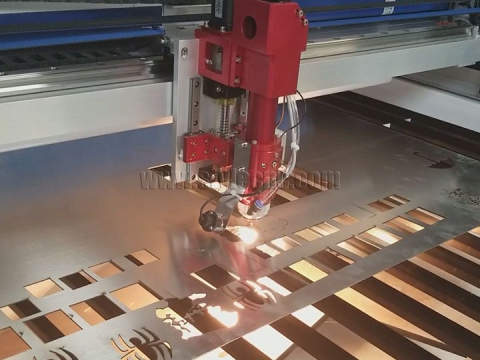
很难调整焦距 CO2 对于初学者来说,金属和非金属激光切割机不太适合,所以我们制作了一个教程视频来帮助您学习如何调整。